

Search is changing from a list of links into a conversation. A prospective customer can ask an AI system which cloud partner, security platform or marketing solution fits a specific need — and make a shortlist before visiting a company website.
That shift is turning AI visibility into a practical martech discipline. It sits at the intersection of content, search, brand management, analytics and customer experience. The question for marketing teams is no longer only “How much traffic did our campaign generate?” It is also “How did AI systems describe us, and did that description help the right buyer take the next step?”
The 2026 signal: IAB’s January outlook reported that 73% of marketers were prioritising content optimised for AI-generated answers, while cross-platform measurement rose to 72%. Its August framework then called for a shared, more rigorous way to measure visibility in AI-powered discovery.
From ranking position to answer presence
Traditional SEO gives teams familiar signals: rankings, impressions, clicks and conversions. AI answers add another layer. A brand may be mentioned without receiving a click; it may be cited prominently but described inaccurately; or it may be absent from a recommendation even though its website ranks well for a conventional query.
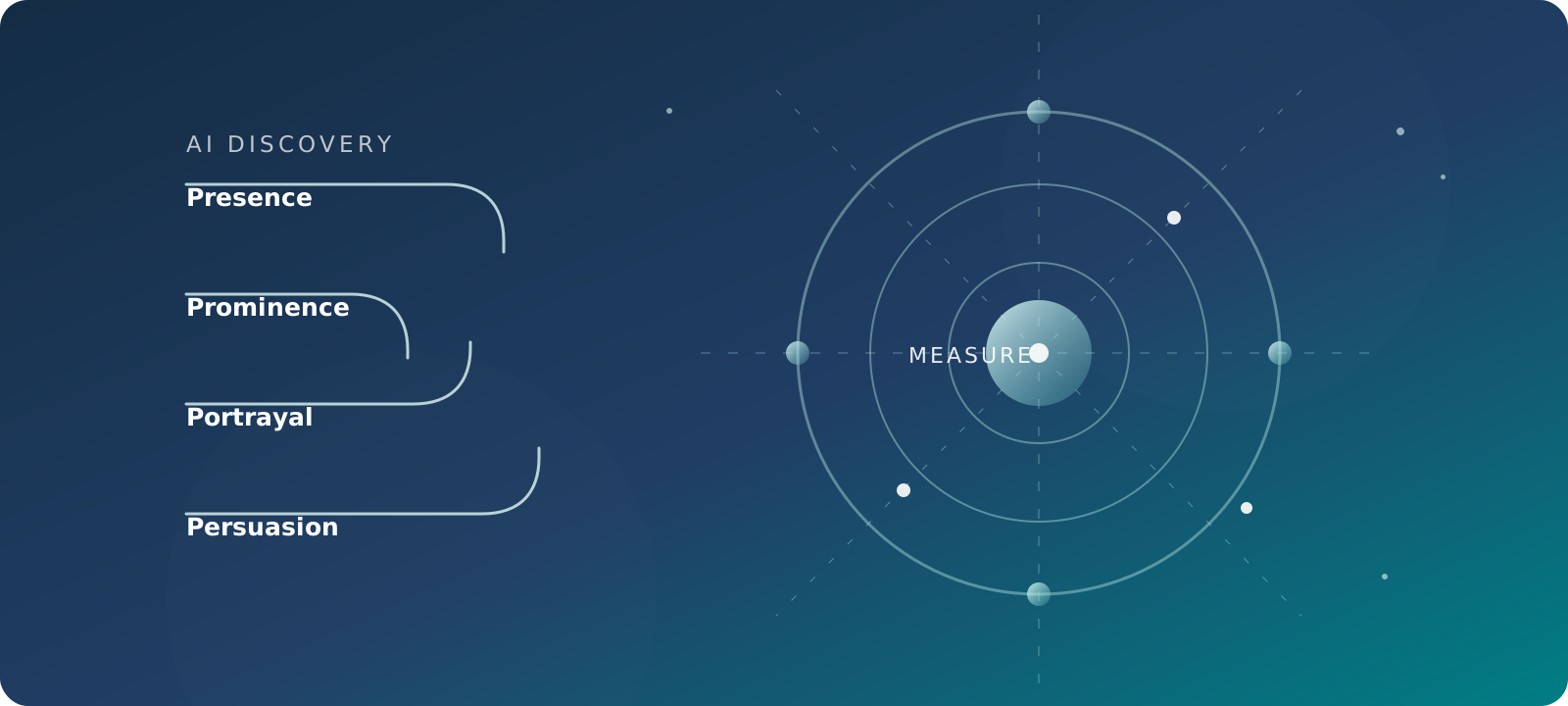
That is why AI visibility should be treated as a funnel rather than a single score:
- Presence: Does the brand appear in the response, and how often across relevant prompts?
- Prominence: Where does it appear, and is its content substantively cited or merely named?
- Portrayal: Is the description accurate, current and aligned with the brand’s intended positioning?
- Persuasion: Does the answer create a meaningful next action, such as a visit, enquiry or recommendation?
Why a visibility score is not enough
Different providers can test different prompts, platforms, geographies and sampling frequencies. Two dashboards can therefore produce different results without either being technically broken. The important question is whether the measurement is suitable for the decision being made.
For early discovery, directional signals can reveal competitors, emerging questions and content gaps. For budget allocation or executive reporting, teams need a higher bar: transparent query design, repeatable sampling, adequate coverage, clear definitions and a way to reproduce the result.
A practical measurement loop for Hong Kong businesses
- Build a prompt library. Start with the questions your buyers actually ask: solution comparisons, local availability, implementation concerns, pricing expectations and trust signals.
- Test more than one environment. Compare the major AI search and conversational experiences that matter to your audience. Record platform, date, location, language and prompt type.
- Audit the answer, not just the mention. Save the response and classify factual accuracy, positioning, citations, competitor context and missing information.
- Connect discovery to first-party signals. Use branded search, direct traffic, referral quality, enquiry source and incrementality tests as complementary evidence — not as a pretend replacement for the AI interaction itself.
- Turn findings into content operations. Clarify service pages, publish evidence-led explanations, maintain consistent entity information and keep outdated claims from being repeated by machines.
The martech stack is becoming an answer stack
This does not make conventional SEO, analytics or CRM less important. It makes the connections between them more important. Content management provides the source material; structured information helps systems interpret it; analytics and CRM show whether attention turns into a qualified conversation; governance protects accuracy and brand trust.
For smaller teams, the first step does not need to be another large platform purchase. A documented prompt set, a monthly review, a simple evidence log and clear owners can reveal more than an impressive dashboard with opaque methodology.
What to do this quarter
- Choose 20–30 high-value prompts in English and Chinese.
- Record baseline presence, prominence, portrayal and action signals.
- Fix the top five factual or positioning gaps on owned pages.
- Review the results monthly and annotate major product, market or platform changes.
- Only use the data for budget decisions when the methodology is transparent and repeatable.
Sources and further reading: IAB: Measuring Visibility in the AI Era (3 August 2026); IAB 2026 Outlook Study (28 January 2026); Semrush AI Visibility Index coverage (June 2026). Statistics and framework descriptions are attributed to the linked sources; the practical recommendations are Dayella’s editorial commentary.